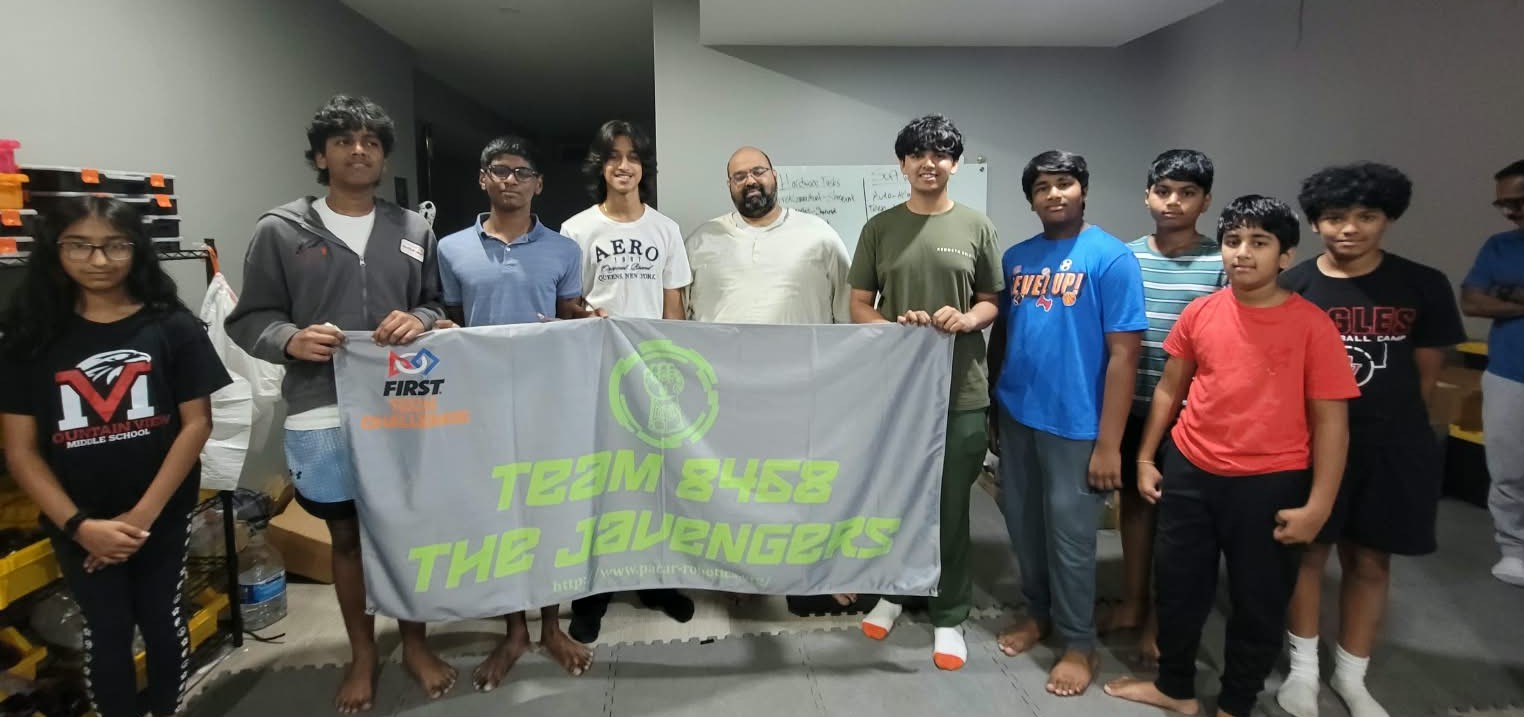
[Oct-3-2026] Dr. Anilchandra Attaluri mentored the Javengers’ junior and senior engineers in an engaging session connecting mathematics and physics with real-world robotics. Through vectors, forces, rotational energy, and mechanical dynamics, he helped students understand ways to improve robot accuracy while inspiring curiosity, problem-solving, and hands-on STEM learning through FIRST Tech Challenge.
We sincerely thank Dr. Anilchandra Attaluri for spending his valuable time with the Javengers and sharing his knowledge and expertise to help the team improve its competition robot. We are especially grateful for his continued support and willingness to guide the Javengers whenever the team needs his expertise.
Dr. Attaluri brings extensive engineering, research, and academic experience to his mentorship. He is an Associate Professor of Mechanical Engineering and Associate Director of the School of Science, Engineering, and Technology at Penn State Harrisburg. His research interests include multi-physics modeling, thermal management, medical-device development, and thermal oncology.
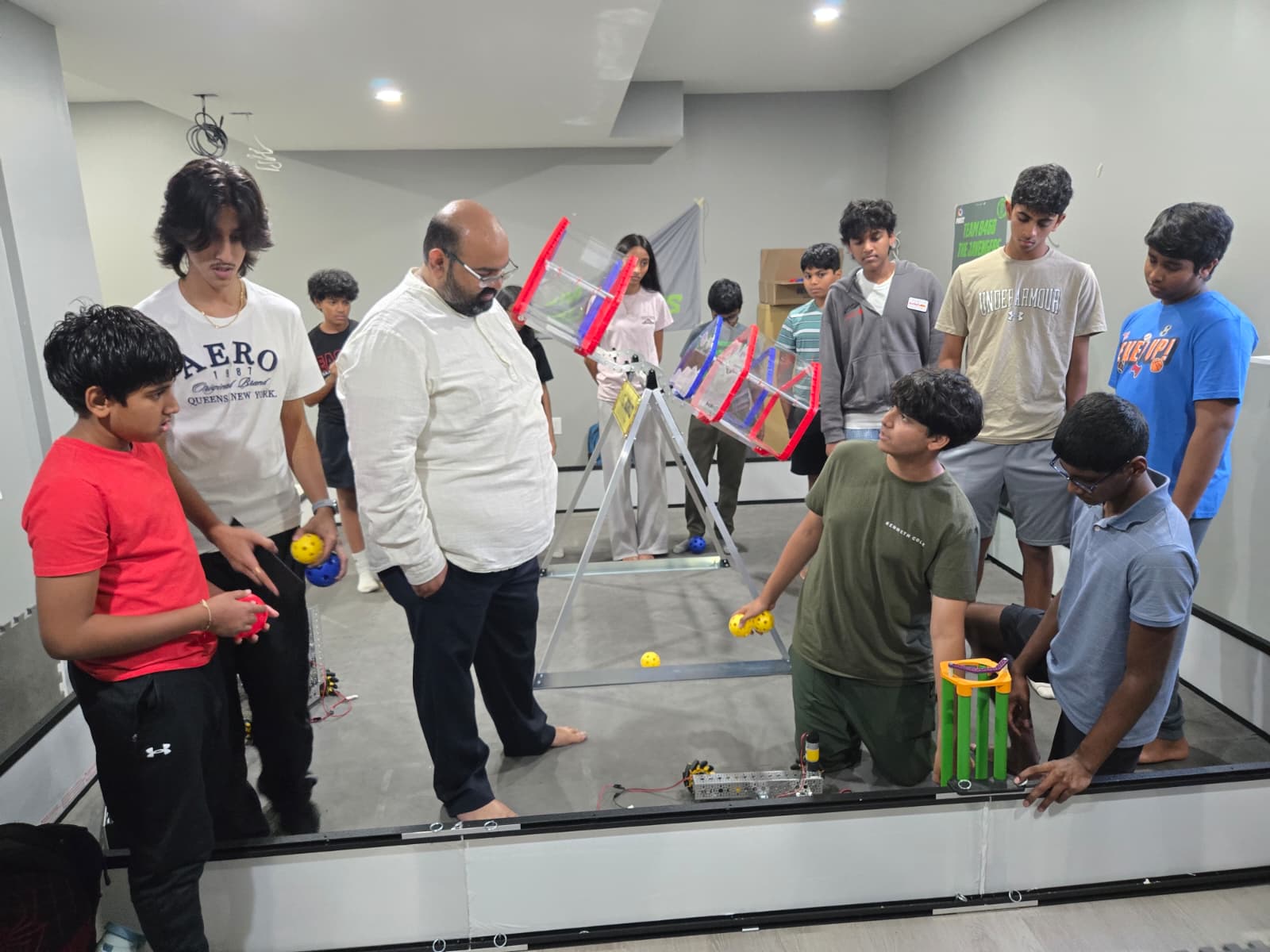
For the Javengers, building a competitive FIRST Tech Challenge (FTC) robot is about much more than assembling mechanical parts—it is about understanding the science behind every movement.
Recently, Dr. Attaluri spent approximately 90 minutes on a Saturday evening mentoring the Javengers’ junior and senior engineers. The session focused on a real engineering challenge the students were facing: how to improve the robot’s target efficiency and accuracy.
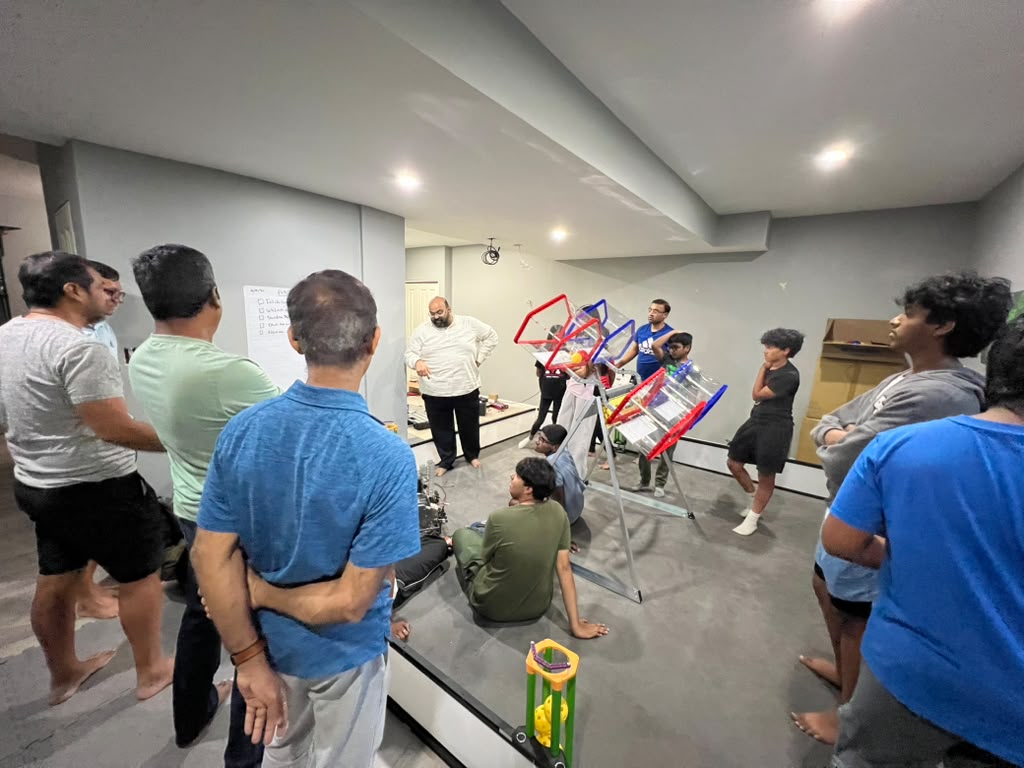
Dr. Attaluri guided the students through the mathematics and physics behind their robot. He explained how vectors and forces work in the X and Y directions, how motion can be analyzed mathematically, and how rotational energy, trajectory, and mechanical dynamics can influence the robot’s ability to accurately deliver a game element toward its target.
Rather than simply providing a solution, Dr. Attaluri encouraged the students to understand the principles behind the problem and apply those concepts themselves—turning mathematical equations and physics into practical engineering decisions.
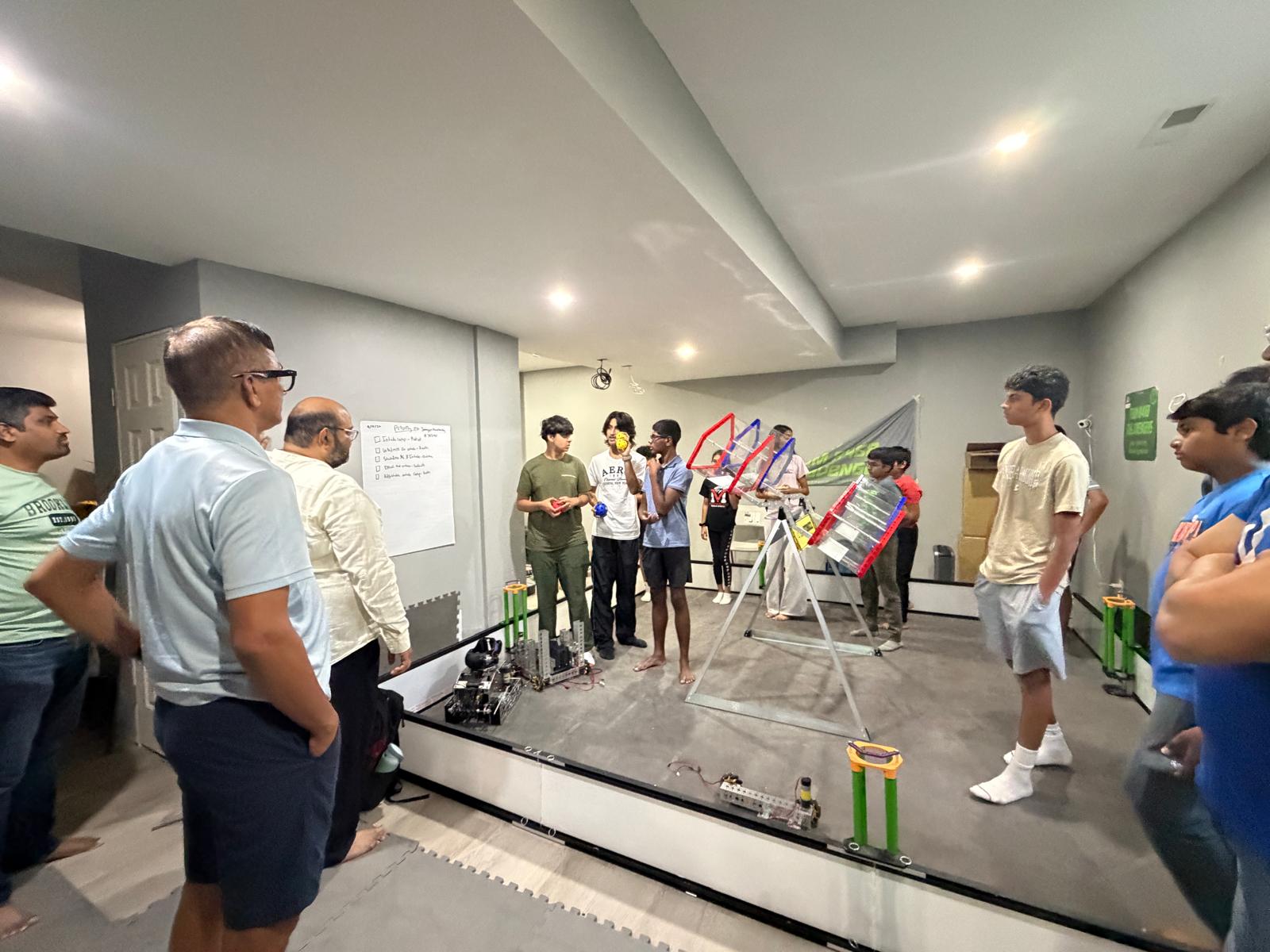
The excitement among the Javengers was clearly visible throughout the session. Students eagerly asked questions, explored ideas, and learned how concepts they study in mathematics and physics can be applied to real-world robotics.
We are grateful to Dr. Attaluri for his continued mentorship of the Javengers and for helping our young engineers transform classroom concepts into real-world robotic solutions. His guidance inspires students to think, experiment, innovate, and grow as the next generation of STEM leaders.